Affordable Health Care
- Home
- Affordable Health Care


Healthcare costs continue to be a major concern for individuals, families, self-employed professionals, and people without employer-sponsored benefits.
Between monthly premiums, deductibles, copays, prescriptions, and unexpected medical bills, finding coverage that fits both your healthcare needs and your budget can feel overwhelming.
The good news is that traditional health insurance is not always the only healthcare pathway available.
Depending on your situation, there may be several ways to help manage your healthcare costs while maintaining access to important medical services.
The right healthcare solution depends on more than price.
Your age, household size, location, health needs, employment status, prescription usage, preferred doctors, and budget can all affect which option makes the most sense.
Some people need comprehensive major medical insurance. Others may be looking for temporary protection, health sharing, prescription savings, telehealth access, or another alternative.
That's why it can be helpful to compare your available pathways before committing to any one solution.
Explore available healthcare options based on your needs, budget, and situation.
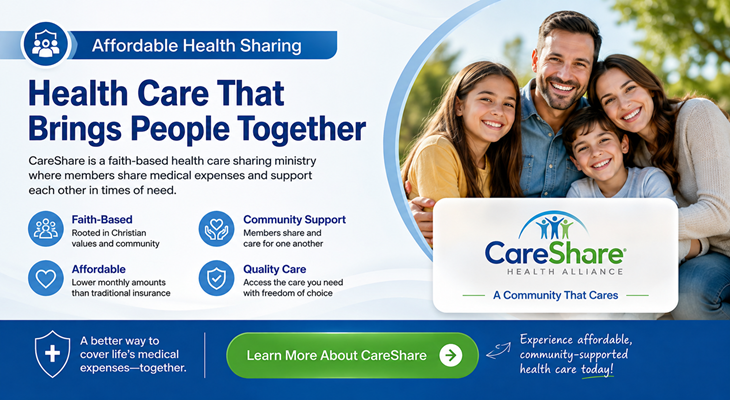
One alternative attracting attention is healthcare sharing.
Health sharing programs are membership-based arrangements in which members contribute money that is used to help pay other members' eligible medical expenses according to the program's guidelines.
Health sharing is not the same as health insurance. Benefits, eligibility requirements, exclusions, contribution amounts, and payment rules vary by organization and program.
However, for some individuals and families, health sharing can provide another way to manage healthcare expenses.
People often explore health sharing because they are looking for greater flexibility or a different cost structure than traditional insurance.
It may be of interest to:
Depending on the specific program, members may value features such as:
The exact features vary considerably, so it is important to review the guidelines of any health sharing program before enrolling.
Health sharing can be useful for the right person, but it should not be confused with comprehensive health insurance.
Before enrolling, understand:
Understanding these details before you need medical care can help prevent unpleasant surprises later.
If traditional insurance feels too expensive, don't assume health sharing is automatically your only other choice.
Depending on your eligibility and location, you may also want to investigate:
In some cases, people use more than one solution—for example, combining primary health coverage with telehealth or prescription savings resources.
Start by reviewing healthcare pathways based on what you actually need instead of trying to sort through dozens of plans on your own.
The least expensive healthcare option is not necessarily the option that will cost you the least over time.
When comparing alternatives, consider the entire financial picture:
A plan or program that looks inexpensive initially could become costly if it does not address the healthcare services you are most likely to use.
Consumers today have more healthcare pathways than many people realize.
Traditional insurance remains an important solution, but newer healthcare models, health sharing, telehealth, prescription savings programs, and other alternatives are giving consumers additional ways to manage their health and healthcare expenses.
The key is not choosing the newest or cheapest option.
It's choosing the solution—or combination of solutions—that fits your circumstances.
See available healthcare pathways and take the next step toward coverage that works for your needs and budget.
Important: Healthcare sharing programs are not health insurance and do not provide the same contractual guarantees or regulatory protections as insurance policies. Eligibility, sharing guidelines, limitations, exclusions, pre-existing-condition provisions, and program availability vary. Other healthcare and insurance options also vary by location, eligibility, provider, and individual circumstances. Review applicable plan or program documents carefully before enrolling.